

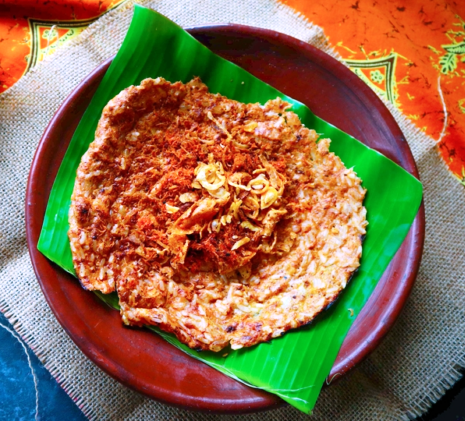
WIN Media, Jakarta, 26/1/2026 – The fragrant aroma of toasted grated coconut and eggs fills the air, followed by the soft sizzle of batter hitting a round pan. This is the cooking symphony of kerak telor, a Betawi culinary icon whose deliciousness lies in the balance of texture: crispy on the outside, soft and savory on the inside. The secret to achieving this textural perfection is hidden in one time-honored instruction: cooking it over low heat or moderate embers. This is not merely tradition, but an intelligent decision dictated by the science of food chemistry and physics.
The Maillard Reaction and the Danger of Sugar Spike
According to Betawi culinary observer, Rohmat Amin, the use of low heat is key to controlling the caramelization and Maillard Reaction — the chemical reaction between amino acids and reducing sugars that creates the golden-brown color and characteristic complex flavor.
“The main components of kerak telor are glutinous rice, rich in starch and sugars, and grated coconut containing fat and natural sugars. If the heat is too high, these sugars will caramelize very rapidly and aggressively, even approaching the burning point, before the starch in the rice and the protein in the eggs have a chance to cook thoroughly,” Amin explains.
The result? A crust that tastes bitter on the outside, while the inside remains wet and raw. Low heat provides sufficient time for the heat to penetrate evenly.
Starch Gelatinization and the Role of Coconut Milk
Glutinous rice has very low amylose and high amylopectin content, making it very sticky and prone to clumping. The slow-cooking process over low heat allows for optimal starch gelatinization. The starch granules slowly absorb liquid (from the coconut milk and eggs), swell, and eventually burst, producing a dense yet not hard texture.
“Coconut milk here is not just a flavoring agent. The fat in the coconut milk coats the starch molecules, slows down the strengthening of the gluten network (although minimal in glutinous rice), and provides a deep savory (umami) taste. Slow heating prevents the coconut milk from ‘breaking’ or becoming oily,” adds Amin.
‘Cooking Zone’ Technique and Water Evaporation
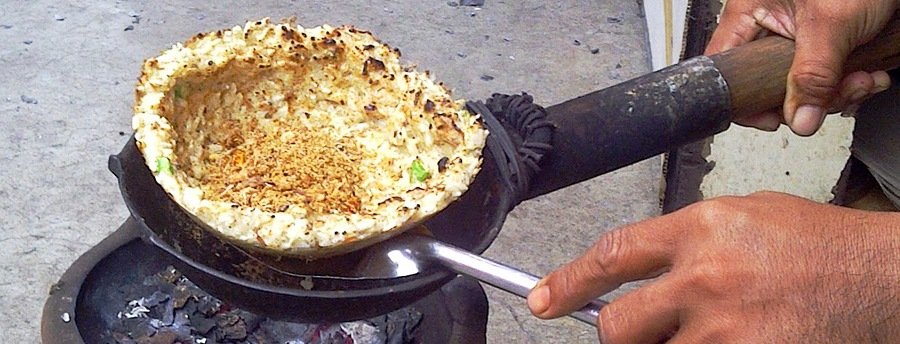
The process of cooking kerak telor in a small mold pan over embers creates three different heat zones: the bottom in direct contact with the hot metal, the middle of the batter, and the top surface.
“Low heat allows this temperature gradient to work effectively. Heat travels slowly from the bottom, cooking the base layer to a crisp while evaporating water from the batter upwards. This water vapor helps cook the middle part. If the heat is too high, the bottom burns immediately and the water vapor cannot escape properly, making the crust ‘puffy’ but soggy inside,” explains a legendary kerak telor vendor in the Tanah Abang area.
A Culinary Heritage Calculated by Science
Thus, the seemingly simple traditional method is a formulation of precision. Low heat is the invisible engineer regulating the rate of critical chemical reactions in the pan: controlling caramelization, managing starch gelatinization, and optimizing water evaporation.
“This is the genius of traditional cuisine. They have been practicing low and slow cooking and heat control long before these modern terms became popular. Every time we enjoy a perfect piece of kerak telor, we are essentially savoring a masterpiece of simple science,” concludes Amin.
It turns out, behind that satisfying crunch, lies a lesson in patience and control, passed down through every gentle breath of flame on the traditional stove.
Di Balik Kerenyahan: Menguak Alasan Ilmiah Kenapa Beras Ketan Dan Kelapa Parut Dalam Kerak Telor Harus Dibakar Di Atas Api Kecil
WIN Media, Jakarta, 26/1/2026 – Aroma harum kelapa parut sangrai dan telur memenuhi udara, disusul suara desis lembut adonan yang menyentuh wajan bulat. Inilah simfoni memasak kerak telor, ikon kuliner Betawi yang kelezatannya terletak pada keseimbangan tekstur: renyah di luar, lembut dan gurih di dalam. Rahasia mencapai kesempurnaan tekstur ini ternyata tersimpan dalam satu perintah turun-temurun: membakarnya di atas api kecil atau bara yang sedang. Ini bukan sekadar tradisi, melainkan sebuah keputusan cerdas yang didiktekan oleh ilmu kimia dan fisika makanan.
Reaksi Maillard dan Bahaya Loncatan Gula
Menurut pemerhati kuliner Betawi, Rohmat Amin, penggunaan api kecil adalah kunci untuk mengontrol proses karamelisasi dan Reaksi Maillard — reaksi kimia antara asam amino dan gula pereduksi yang menciptakan warna cokelat keemasan dan rasa kompleks yang khas.
“Komponen utama kerak telor adalah beras ketan yang kaya akan pati dan gula, serta kelapa parut yang mengandung lemak dan gula alami. Jika api terlalu besar, gula-gula ini akan karamelisasi dengan sangat cepat dan agresif, bahkan mendekati titik gosong, sebelum pati dalam ketan dan protein dalam telur sempat matang sempurna,” jelas Amin.
Hasilnya? Kerak akan terasa pahit di bagian luar, sementara bagian dalamnya masih basah dan mentah. Api kecil memberikan waktu yang cukup untuk panas menembus secara merata.
Gelatinisasi Pati dan Peran Santan
Beras ketan memiliki kandungan amilosa yang sangat rendah dan amilopektin yang tinggi, membuatnya sangat lengket dan mudah menggumpal. Proses memasak dengan api kecil memungkinkan gelatinisasi pati terjadi secara optimal. Butiran pati menyerap cairan (dari santan dan telur) secara perlahan, membengkak, dan akhirnya pecah, menghasilkan tekstur yang padat namun tidak keras.
“Santan di sini bukan sekadar pewangi. Lemak dalam santan membungkus molekul pati, memperlambat penguatan jaringan gluten (walau sedikit dalam ketan) dan memberikan rasa gurih (umami) yang mendalam. Pemanasan perlahan mencegah santan ‘pecah’ atau berminyak,” tambah Amin.
Teknik ‘Zona Memasak’ dan Penguapan Air
Proses memasak kerak telor di wajan cetakan kecil di atas bara menciptakan tiga zona panas berbeda: bagian bawah yang langsung bersentuhan dengan logam panas, bagian tengah adonan, dan permukaan atas.
“Api kecil memungkinkan gradien suhu ini bekerja dengan baik. Panas merambat pelan dari bawah, mematangkan lapisan dasar hingga renyah sembari menguapkan air dari adonan ke atas. Uap air ini membantu mematangkan bagian tengah. Jika api besar, bagian bawah langsung gosong dan uap air tidak sempat keluar dengan baik, membuat kerak jadi ‘ngembang’ tapi basah di dalam,” papar pedagang kerak telor legendaris di kawasan Tanah Abang.
Warisan Rasa yang Dihitung Ilmiah
Jadi, metode tradisional yang terlihat sederhana itu adalah sebuah formulasi presisi. Api kecil adalah insinyur tak terlihat yang mengatur laju reaksi kimia kritis di dalam wajan: mengontrol karamelisasi, mengelola gelatinisasi pati, dan mengoptimalkan penguapan air.
“Inilah kejeniusan kuliner tradisional. Mereka telah mempraktikkan low and slow cooking dan heat control jauh sebelum istilah-istilah modern itu populer. Setiap kali kita menikmati sepotong kerak telor yang sempurna, kita sebenarnya sedang menyantap sebuah mahakarya sains sederhana,” tutup Amin.
Ternyata, di balik kerenyahan yang memuaskan itu, tersembunyi sebuah pelajaran tentang kesabaran dan pengendalian, yang diwariskan melalui setiap hembusan api kecil di anglo.