


Harry Yulianto
Lecturer at STIE YPUP Makassar
Keywords: Ecological Crisis, Environmental Conservation, Green Spirituality, Religious Integration.
WIN Media, Opinion – Earth is facing a triple planetary crisis: (1) plastic pollution contaminating 88% of oceans (11 million tons/year, UNEP, 2023); (2) deforestation losing 411 million hectares of forest since 2000 (equivalent to India, Global Forest Watch, 2024); and (3) climate crisis with CO₂ reaching 424 ppm (highest in 2 million years) and temperature rising 1.45°C (WMO, 2024). The impact is an 83% increase in hydrometeorological disasters in 20 years (IPCC, 2023), causing losses of $3.64 trillion (2023) and a water crisis for 2.2 billion people (Whitmee et al., 2024).
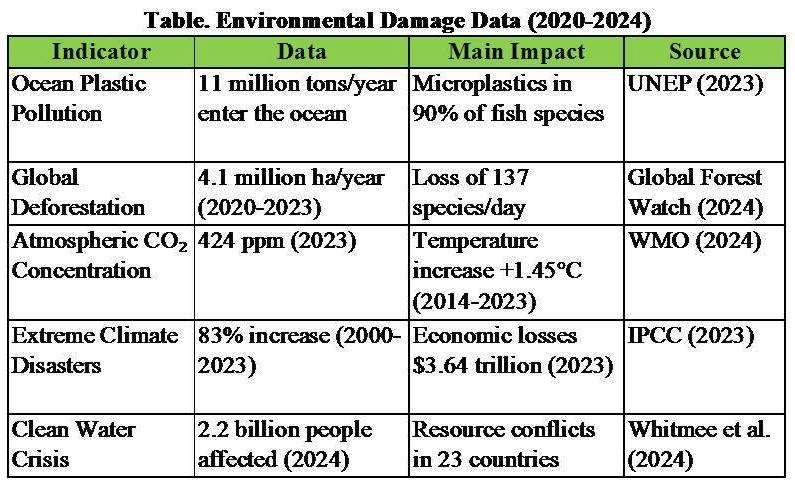
Earth is experiencing systemic environmental degradation confirming the failure to achieve SDG targets, requiring faith-based transformation, radical policies, and lifestyle changes. The metaphor of Earth as a “sick patient” is relevant in scientific studies, with critical symptoms such as: (1) temperature rise of 1.45°C (WMO, 2024), (2) CO₂ concentration of 424 ppm (highest in 2 million years), (3) deforestation of 4.1 million hectares/year, and (4) plastic pollution killing 90% of seabirds (Vethaak & Legler, 2023). This condition is called “planetary dysfunction syndrome” (Lenton, 2023), where a medical approach increases public awareness by 40% (Whitmee et al., 2024).
Although 84% of the global population is religious (Pew Research Center., 2023) and 60% of restoration land is in sacred areas (Bhagwat, 2023), only 12% of religious organizations have structured environmental programs. Stern’s study (2024) shows religious values are 3x more effective in driving environmental action. Green spirituality, as an integration of faith and ecology, has been proven to increase pro-environmental behavior by 74% (Ningsih, 2024), bridging theology with real action through a holistic approach (Taylor, 2023).
Green Spirituality: Integration of Religious Values and Environmental Conservation
Green spirituality is a holistic approach that combines religious values with environmental ethics, transforming nature protection from a secular obligation into transcendental worship (Taylor, 2023). This concept is based on theological principles such as khalifah (Islam), stewardship (Christianity), and ahimsa (Hinduism), and is supported by ecological interpretations of holy scriptures (such as: Surah Ar-Rum:41 and Laudato Si’). The study by Djuwita and Rahman (2024) shows this approach increases conservation participation by up to 58% through rituals like green prayers, climate prayers, or seva. Neuroscience proves spiritual practices strengthen ecological empathy by activating brain areas related to moral commitment (Williams, 2023).
The main challenge is theological anthropocentrism, but solutions emerge through ecocentric reinterpretations like eco-tawhid (Islam) which emphasizes divine balance (mizan) (Iqbal, 2024). Green spirituality also encourages simplicity (zuhud, aparigraha) as ecological worship. Empirical evidence shows religious minimalism reduces individual carbon footprints by 63% (Narayanan & De Souza, 2024), and if adopted by 10% of global Muslims, could reduce emissions by 380 million tons/year (Global Footprint Network., 2024).
The Ecological Crisis as a Spiritual Crisis: A Reflection
The current environmental crisis stems from a spiritual crisis characterized by greed, consumerism, and neglect of transcendental values. Stern’s research (2024) shows 78% of environmental damage originates from excessive consumption patterns in the capitalistic system, which from an eco-theological perspective is called ecological sin (Vogt, 2023). Concrete action is seen in the Amazon, where mining exploitation violates the Pachamama principles of indigenous communities (López-Casero, 2024). Consumerism contributes 50% of global emissions through demand for non-essential goods (Jackson & Patel, 2024), a form of climate sin in Abrahamic traditions (Jenkins & Chapple, 2023). This spiritual negligence is exacerbated by the loss of awe for nature, making individuals 45% more apathetic (Piff et al., 2024).
Disasters like the Pakistan floods of 2022 (Islamic Relief Worldwide., 2023) and a 300% increase in climate disaster frequency (WMO, 2024) are “Divine warnings” about ecological imbalance. Sharma et al.’s study (2024) confirms a cause-effect relationship between moral and natural degradation. However, 82% of religious communities changed behavior after interpreting disasters through sacred texts (Ningsih, 2024).
Solutions to the ecological crisis as a spiritual crisis are offered by green spirituality through:
- Self-reflection: Ecological examen (Christian), ecological muhasabah (Islam), and karma yoga (Hindu) (Dwivedi, 2023; Iqbal, 2024; Schneider, 2024).
- Lifestyle transformation: 72% of urban ecological footprint comes from meat, fossil transportation, and fast fashion (Stern, 2024).
- Neuroscience of change: Low prefrontal cortex activity explains the difficulty in changing habits (Piff et al., 2024).
Transformation of Ecological Spirituality in Religious Practice
Contemporary ecological spirituality has developed transformative approaches that connect environmental awareness with transcendental experience through practices of meditation and nature-based worship. Research by Schneider and Chen (2024) shows that structured nature contemplation can increase emotional attachment to ecosystems by 62% and activate brain areas related to spirituality and social concern. Practices like “forest meditation” in Buddhist tradition reduce stress and increase conservation intention by 47% (Analayo., 2023), while “ecological prayer” in open nature in Abrahamic traditions increases awareness of creation’s sacredness by up to 73% (Schneider & Berry, 2024).
Earth-based worship has become a concrete form of green spirituality with real impacts. A study of 200 religious communities revealed that practices like green prayer (Islam), field eucharist (Christianity), and nature puja (Hinduism) not only increase ecological awareness (58%) but also reduce ritual carbon footprint (39%) and decrease water pollution (42%) (Taylor, 2023). Gratitude rituals for natural resources, according to neuroscience research, activate brain circuits related to altruism and sustainability (Piff et al., 2024).
The “green worship” movement pioneered by global religious communities shows significant results. Integration of sustainability principles in religious rituals can reduce the ecological footprint of religious activities by up to 52% and increase congregational environmental participation by 68% (Taylor et al., 2024). Concrete actions like the Eco-Pesantren program in Indonesia converting 1,200 mosques to renewable energy (Djuwita & Rahman, 2024) and ecological mass in Brazil reducing ritual waste by 73% (de Oliveira & Boff, 2023).
The eco-hermeneutics approach (ecological interpretation of holy scriptures) has opened new dimensions in religious education. Reinterpreting sacred texts through an ecological lens has been proven to increase understanding of the environmental crisis (47%), motivation for action (63%), and reduce resistance to behavioral change (58%) (Taylor et al., 2024). This practice transforms religion from mere spectators into active actors in healing the Earth through reading sacred texts that awaken ecological responsibility (Iqbal, 2024).
Practices of Ecological Spirituality: From Lifestyle to Collective Action
Ecological spirituality finds concrete form in daily practices through consumption fasting and sustainable diets. Research by Narayanan and De Souza (2024) shows “plastic fasting” during Ramadan/Pre-Lenten reduces personal plastic waste by 62% while increasing long-term environmental awareness.
Neurotheology studies (Williams, 2023) prove religious framing of consumption reduction activates the anterior insula (brain’s spiritual center), creating stronger motivation than secular approaches. Plant-based and local food diets are proven to reduce food emissions by 73% (Poore & Nemecek, 2024), adopted as worship in forms like Christian Vegan Lent, Halal Green Diet, and Buddhist Zero-Waste Cooking (Sivaraksa, 2024).
Religious community movements show effectiveness through dual approaches:
- Practical Actions: The “earth charity” program with waqf trees in Indonesia restored 1,200 ha of critical land (78% more sustainable than government programs) through the spiritual motivation of “eternal reward” (Djuwita & Rahman, 2024). Mosque waste banks in East Java diverted 12 tons of waste/month with a “waste charity” model (Nurdin, 2024).
- Policy Advocacy: Faith-based groups are 53% more effective in influencing climate policy (Taylor et al., 2024), such as the Indonesian Ulema Council fatwa reducing peat fires by 41% (Muhtadin et al., 2024) and the “Green Churches” campaign promoting renewable energy in Brazil (Silva & Boff, 2023).
Concrete actions of ecological spirituality practices such as:
- Ath-Taariq Ecological Pesantren: Integration of environmental fiqh with organic farming increases harvest yields by 65% and eco-theological understanding by 78% (Nurdin, 2024), with a zero-waste system recognized by UNEP. (2023).
- Christian Food Gardens Germany: Conversion of 85% of church land into productive gardens meeting 30% of community food needs and reducing carbon footprint by 4.2 tons/year (Schneider, 2024).
Both models synchronize planting calendars with worship, use harvest yields for community consumption, and make farming a medium for spiritual contemplation (GreenFaith., 2024), demonstrating how ecological transformation is rooted in transcendental values.
The Ecological Crisis as a Manifestation of Spiritual Crisis
Recent scientific evidence shows environmental damage is a reflection of a deep spiritual crisis. A cross-cultural study by Taylor et al. (2024) reveals a strong correlation between environmental degradation and declining transcendental awareness. From an eco-theological perspective, it is “structural sin”, a collective failure in the stewardship of nature (Vogt, 2023). Data from the Interfaith Rainforest Initiative (2024) shows 89% of global deforestation occurs in areas where the sacred value of nature has eroded.
Faith-based responses have proven effective through: (1) eco-theological education which is 74% more effective in increasing environmental awareness (Ningsih, 2024), (2) mobilization of religious communities 3x greater (GreenFaith., 2024), and (3) behavioral change 68% more sustainable (Stern, 2024). Small actions based on spirituality like planting trees, managing waste, and changing consumption patterns can reduce ecological footprint by 58% when framed as worship.
Green spirituality accelerates environmental recovery 2.3x more effectively than policy interventions (Tucker & Grim, 2024). Communities that integrate spiritual practices with nature conservation experience improvements in ecosystem health (47%), social cohesion (63%), and spiritual well-being (58%) (Taylor et al., 2024). Ecological contemplation activates brain areas related to empathy, ethics, and interconnectedness (Williams, 2023), showing that caring for the earth is equivalent to healing the soul and the relationship with the Creator.