

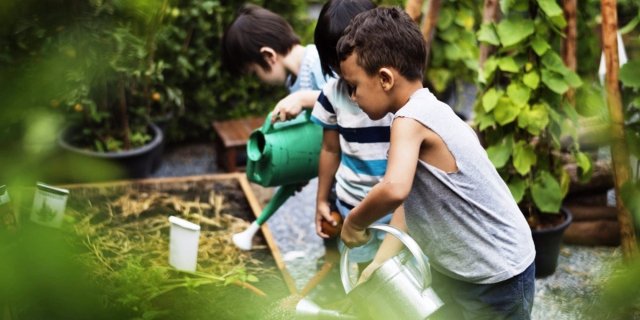
WIN Media, Makassar, 6/2/2026 – In an effort to address high levels of academic stress and mental burnout among students, the outdoor classroom learning approach is regaining prominence. The latest scientific evidence confirms that learning in natural settings is not only enjoyable but can significantly lower the stress hormone cortisol and improve memory function and attention.
This concept shifts the teaching and learning process from conventional indoor classrooms to open natural environments such as school gardens, botanical parks, or green areas around schools.
Learning is no longer confined to theory but involves direct observation, exploration, and sensory activities.
Harry Yulianto, an Educational Technology Expert from STIE YPUP Makassar, stated that these findings align with the principles of contextual learning and neuroscience. “Natural environments provide ‘attention restoration.’ The green and open atmosphere reduces the cognitive load stemming from enclosed, competitively stimulating classrooms. Students’ brains become more relaxed and ready to consolidate new information,” he explained.
Harry referred to several recent international scientific studies. Research titled “Nature-based instruction improves memory and attention in young adults” (Lee & Kim, 2024) published in the journal Frontiers in Psychology, experimentally proved that participants who received instruction in a natural setting showed an 18% higher performance improvement in working memory and sustained attention tests compared to the group learning indoors.
Another study, “The effects of urban and natural environments on stress reduction and cognitive performance: A psychophysiological study” (Vargas et al., 2025) in the journal Environmental Health Perspectives, found that brief exposure (20 minutes) to green environments could lower salivary cortisol levels and improve heart rate variability (HRV)—a physiological indicator of stress recovery—in adolescent groups.
“Its implementation in Indonesia is highly feasible without significant cost. A biology lesson on ecosystems can be held in the school garden, sociology on social interaction can be observed in a city park, or physics on temperature and heat can utilize the immediate environment. The teacher’s role is to act as a facilitator designing ‘bridges’ between the curriculum and reality in nature,” elaborated Harry.
He added that this movement also serves as a crucial counterbalance in the era of digital overload. “After hours of screen time, nature provides a natural digital detox that revitalizes students’ mental capacity. This is a simple, evidence-based, low-cost strategy to enhance psychological well-being and academic outcomes simultaneously.”
Kembali ke Alam: Outdoor Classroom Terbukti Turunkan Stres dan Tingkatkan Daya Ingat
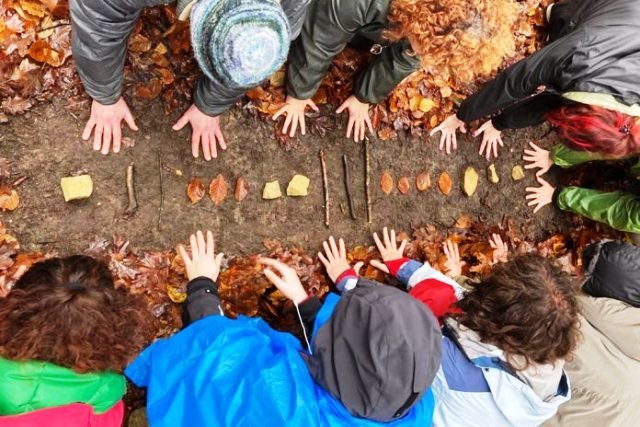
WIN Media, Makassar, 6/2/2026 – Dalam upaya mengatasi tingginya tingkat stres akademik dan kelelahan mental (burnout) pada siswa, pendekatan pembelajaran di luar ruangan (outdoor classroom) kembali mendapat sorotan. Bukti ilmiah terbaru mengkonfirmasi bahwa belajar di tengah alam tidak hanya menyenangkan, tetapi secara signifikan dapat menurunkan hormon stres kortisol dan meningkatkan fungsi memori serta atensi.
Konsep ini memindahkan proses belajar mengajar dari dalam kelas konvensional ke lingkungan alam terbuka seperti taman sekolah, kebun botanis, atau kawasan hijau di sekitar sekolah.
Pembelajaran tidak lagi terbatas pada teori, tetapi melibatkan observasi langsung, eksplorasi, dan aktivitas sensorik.
Harry Yulianto, Pakar Teknologi Pendidikan dari STIE YPUP Makassar, menyatakan bahwa temuan ini sejalan dengan prinsip pembelajaran kontekstual dan neurosains. “Lingkungan alam memberikan ‘restorasi perhatian’ (attention restoration). Suasana hijau dan terbuka mengurangi beban kognitif yang berasal dari ruang kelas yang serba tertutup dan penuh stimulus kompetitif. Otak siswa menjadi lebih rileks dan siap untuk mengkonsolidasi informasi baru,” jelasnya.
Harry merujuk pada sejumlah penelitian ilmiah internasional terkini. Sebuah studi berjudul “Nature-based instruction improves memory and attention in young adults” (Lee & Kim, 2024) yang terbit di jurnal Frontiers in Psychology, secara eksperimental membuktikan bahwa peserta yang menerima instruksi di setting alam menunjukkan peningkatan kinerja 18% lebih tinggi dalam tes memori kerja (working memory) dan atensi berkelanjutan dibandingkan kelompok yang belajar di dalam ruangan.
Penelitian lain, “The effects of urban and natural environments on stress reduction and cognitive performance: A psychophysiological study” (Vargas et al., 2025) di jurnal Environmental Health Perspectives, menemukan bahwa paparan singkat (20 menit) terhadap lingkungan hijau dapat menurunkan level kortisol air liur dan meningkatkan variabilitas detak jantung (HRV)—indikator fisiologis dari pemulihan stres—pada kelompok remaja.
“Implementasinya di Indonesia sangat mungkin dilakukan tanpa biaya besar. Sebuah pelajaran biologi tentang ekosistem bisa langsung di kebun sekolah, sosiologi tentang interaksi sosial bisa diobservasi di taman kota, atau fisika tentang suhu dan kalor bisa dengan memanfaatkan lingkungan sekitar. Guru berperan sebagai fasilitator yang merancang ‘jembatan’ antara kurikulum dan realita di alam,” papar Harry.
Dia menambahkan, gerakan ini juga menjadi penyeimbang yang krusial di era gempuran digital. “Setelah berjam-jam menatap layar, alam memberikan digital detox alami yang merevitalisasi kapasitas mental siswa. Ini adalah strategi sederhana, berbasis bukti, dan berbiaya rendah untuk meningkatkan kesejahteraan psikologis dan sekaligus hasil akademik.”